

Why a Native Hedgerow Earns Its Place
Few garden features work as hard as a mixed native hedgerow. Within a couple of seasons of planting, it becomes a windbreak, a privacy screen, a larder for birds and a sheltered corridor for everything from hedgehogs to hoverflies. Unlike a single-species privet or leylandii run, a mixed hedge gives you staggered flowering, berries through autumn and winter, and a structure that changes week by week. It also roots the garden into the wider landscape, echoing the field boundaries that have shaped the British countryside for centuries.
If your plot fronts a road, backs onto open ground or simply feels overlooked, a native hedge is one of the most valuable things you can put in the ground. It costs relatively little, establishes quickly and, once settled, asks for very little beyond an annual trim.
Choosing the Right Mix
The trick is to blend species so something is always in leaf, flower or fruit. Aim for a backbone of long-lived, dense shrubs with a few faster, flashier companions. A good rule of thumb is five to seven species in a run of ten metres or more, planted in odd-numbered groups so the hedge doesn't look regimented.
- Hawthorn (Crataegus monogyna) – the classic hedge plant. Dense, thorny, superb nesting cover, with creamy May blossom and red haws in autumn.
- Blackthorn (Prunus spinosa) – early white flowers on bare wood in March, then sloes for gin. Suckers, so give it room.
- Hazel (Corylus avellana) – soft green catkins in late winter and nuts that squirrels and dormice adore. Coppices well.
- Field maple (Acer campestre) – excellent golden autumn colour and a favourite of aphid-hunting birds.
- Holly (Ilex aquifolium) – evergreen winter shelter and berries for thrushes. Slow to start.
- Guelder rose (Viburnum opulus) – lacy white flowers, translucent red berries and rich autumn tints.
- Dog rose (Rosa canina) – scrambling stems that birds nest in, with hips for winter food.
Avoid mixing in non-natives if wildlife is the priority; native insects have evolved alongside native plants and simply can't use many ornamental species. If your soil is heavy clay, hawthorn, blackthorn and field maple will shrug it off. On thin chalk, add wayfaring tree and spindle.
Planting Bare Roots in the Dormant Season
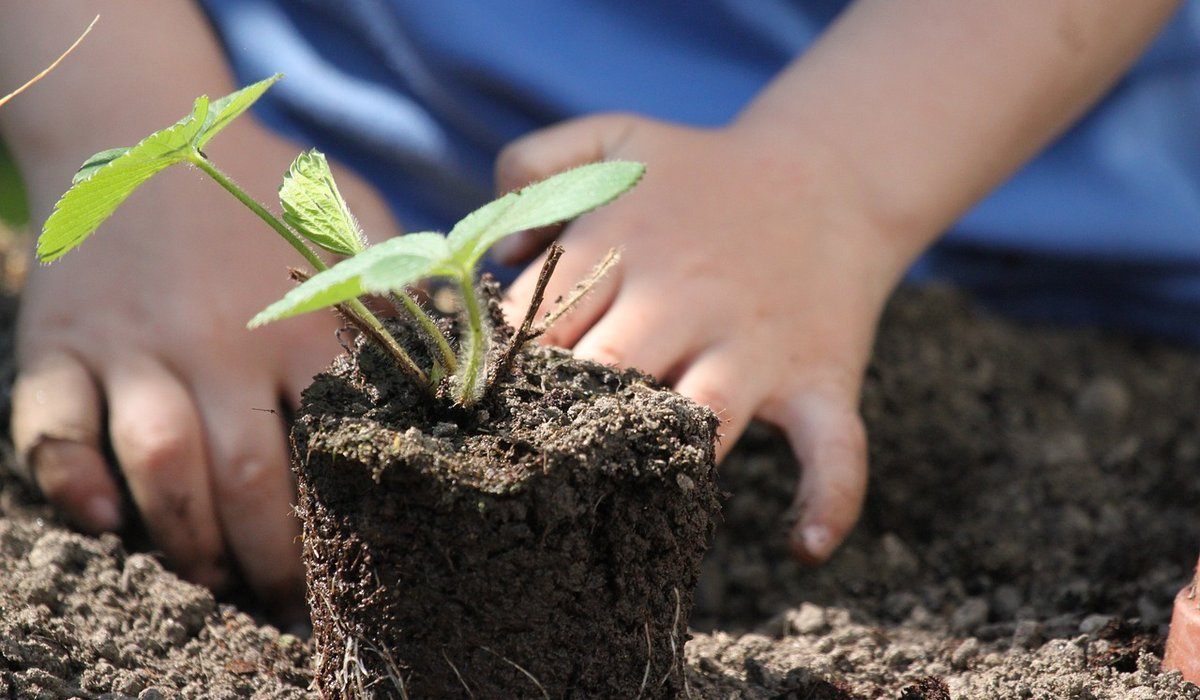
November to March is the window, and bare-root plants bought from a hedging nursery are far cheaper than potted stock and establish better. Order whips of 60–90cm, which settle in faster than larger plants.
Prepare a strip about 60cm wide, clearing perennial weeds and digging in a little well-rotted organic matter. Plant in a double staggered row, 30–45cm apart, which quickly knits into a thick, stock-proof barrier. Space the rows roughly 40cm apart.
Firm each plant in well and water thoroughly, even in winter. Then mulch with bark or compost to keep moisture in and weeds down. If rabbits, deer or livestock are about, a spiral guard and a sturdy stake are essential for the first two or three years.
You don't need a huge garden. A hedge along a 6-metre boundary will still offer a genuine wildlife corridor, especially if it links up with a neighbour's planting or a nearby tree line.
Wildlife That Moves In
The speed at which life appears is the real pleasure of a native hedge. Within a year you may spot the tell-tale woven nest of a dunnock low down, or hear the scolding of a wren deep inside the thorns. Blackbirds, song thrushes, robins, blue tits and chaffinches all use hedges for nesting, roosting and feeding.
In summer the blossom draws bees, hoverflies and moths. Later, haws, sloes, hips and nuts feed redwings and fieldfares arriving for winter. At the base, the leaf litter and tussocky margin shelter beetles, frogs and the occasional hedgehog, which will happily use a hedge as a highway between gardens. If you leave a metre-wide rough strip at the foot and resist strimming, you'll double the value.
Trimming Without Ruining It
Cut hedges on a three-year rotation rather than annually, and you'll keep far more flowers and berries. Trim in late winter (before March) or, better still, after the berries have gone in February. Never cut between March and August, when birds are nesting.
Shape the hedge so it is wider at the base than the top – an A-frame profile lets light reach the lower leaves and stops it going bare and leggy. Use hand shears or a sharp hedge trimmer, and cut back only the current season's growth, leaving the older wood intact. Every few years, one section can be laid or coppiced to rejuvenate it and let light into the base.
Living Boundaries and Long-Term Value
A native hedge takes a few years to hit its stride, but it will outlast most fences and cost far less over time. It absorbs noise, filters dust, blocks wind without the turbulence a solid panel creates, and quietly locks away carbon as it grows. It also gives your garden a sense of place that no imported conifer can match.
Start small, plant generously, water in the first two summers, and then let it get on with it. The birds will find it. So will the bees, the moths and, if you're lucky, a hedgehog shuffling along the base on a warm June evening.



John Doe
14 January, 2022Having no content in post should have adverse..
Chauffina Carr
10 April, 2022We use these tests all time! Killer stuff!
Jim Séchen
16 July, 2022Thanks for all the comments, everyone!